September 2026. A study of one photographer’s colour, made from inside their own archive of edited photographs.
What this study is about
Some photographs are held in a single colour: a beach at sunset where everything is gold, a café at night where everything is amber, a sea where everything is blue. On this site that is a key. It is different from a cast, where a picture has many colours and a faint warm or cool tint sits over all of them. The quick test is to halve the saturation. A key dies, because the colour was the picture. A cast barely changes, because the picture was really made of light and dark.
The student model described in Journal #3 measures each of my collaborator’s edited photographs in numbers, and one of those numbers is meant to say whether a picture is a key. By that number, 28 percent of their colour photographs are keys.
I wanted to know three things. When they make a key, was the colour already in the scene, or did they add it in editing? Can a written description of a scene tell you a key is coming? And is the number right?
How I looked
I took every photograph the number calls a key, 242 of them, and looked at each one at a size where I could actually see it, writing down a verdict before looking at anything else: is this picture held in one colour, partly, or not at all? And where does the colour come from: the light, the material in front of the camera, the weather, or the edit?
For every one of those photographs there is also a plain version, the original file developed with no adjustments, which shows what the camera saw before my collaborator touched it. I compared the two. If the plain version was already one colour, the key was found. If it was many colours and the edit made it one, the key was made.
Finally I tested the number blind. I mixed 32 photographs it calls borderline or not keys, shuffled them, hid the numbers, and wrote my verdicts before checking.
Found, then amplified
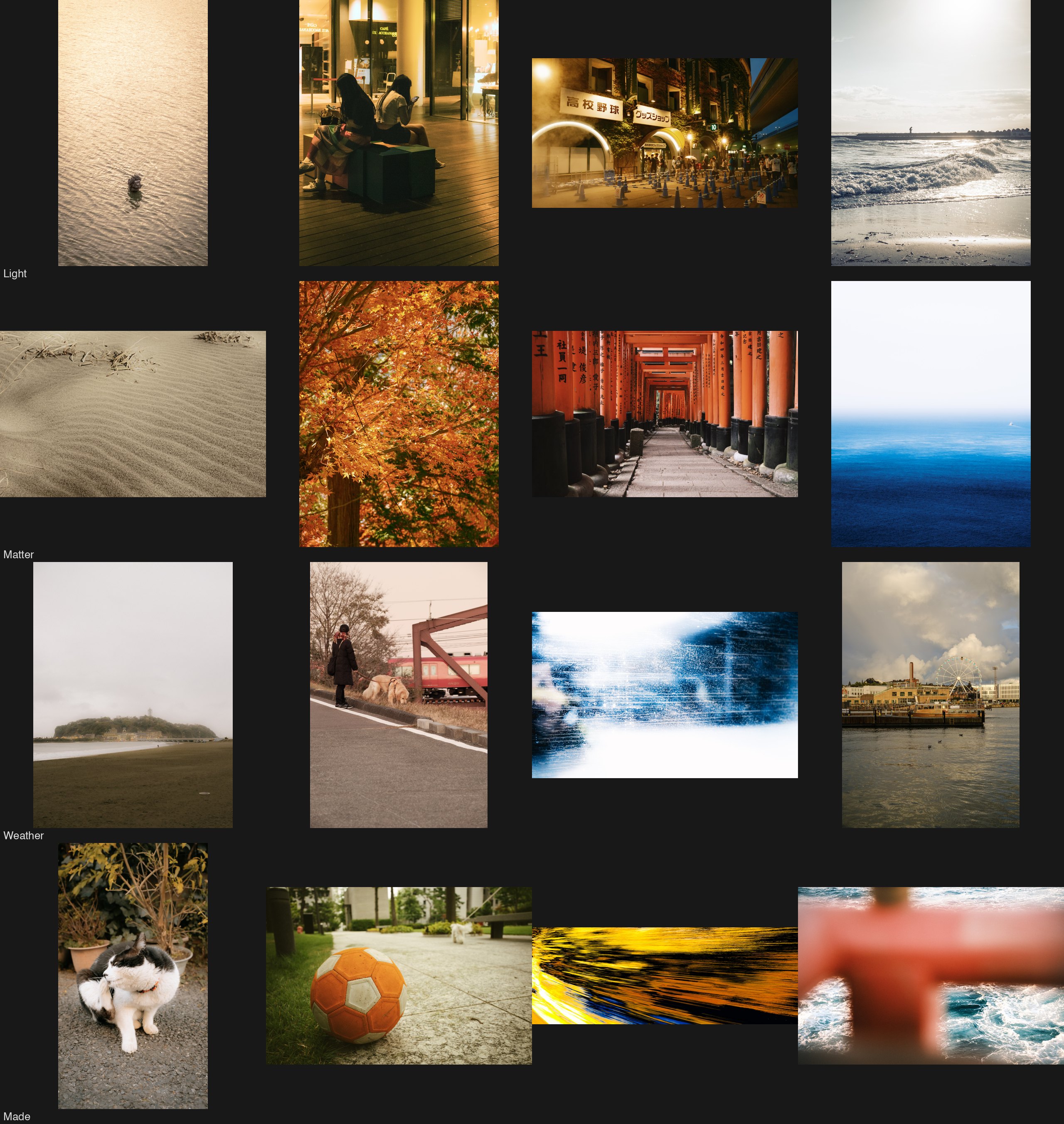
Of the 242 photographs, 126 are held in one colour to my eye, 33 partly, and 83 not at all.
For the 126 real keys, the plain versions answer the first question clearly. Ninety-five were already one colour before any editing. The scene arrived that way: shooting into the sun on a beach, a room lit by tungsten bulbs, the orange light of a stadium at night, a dune of sand, a single maple tree, the red gates at Fushimi, sea and sky. The edit kept that colour and made it stronger, roughly two and a half times more saturated. Three were turned from one colour to another, a blue dusk taken to gold. Twenty-eight were made from scenes that had several colours, and most of those are a warm tint over a grey ground, a cat on gravel, a ball on paving, which by my own test are casts, not keys.
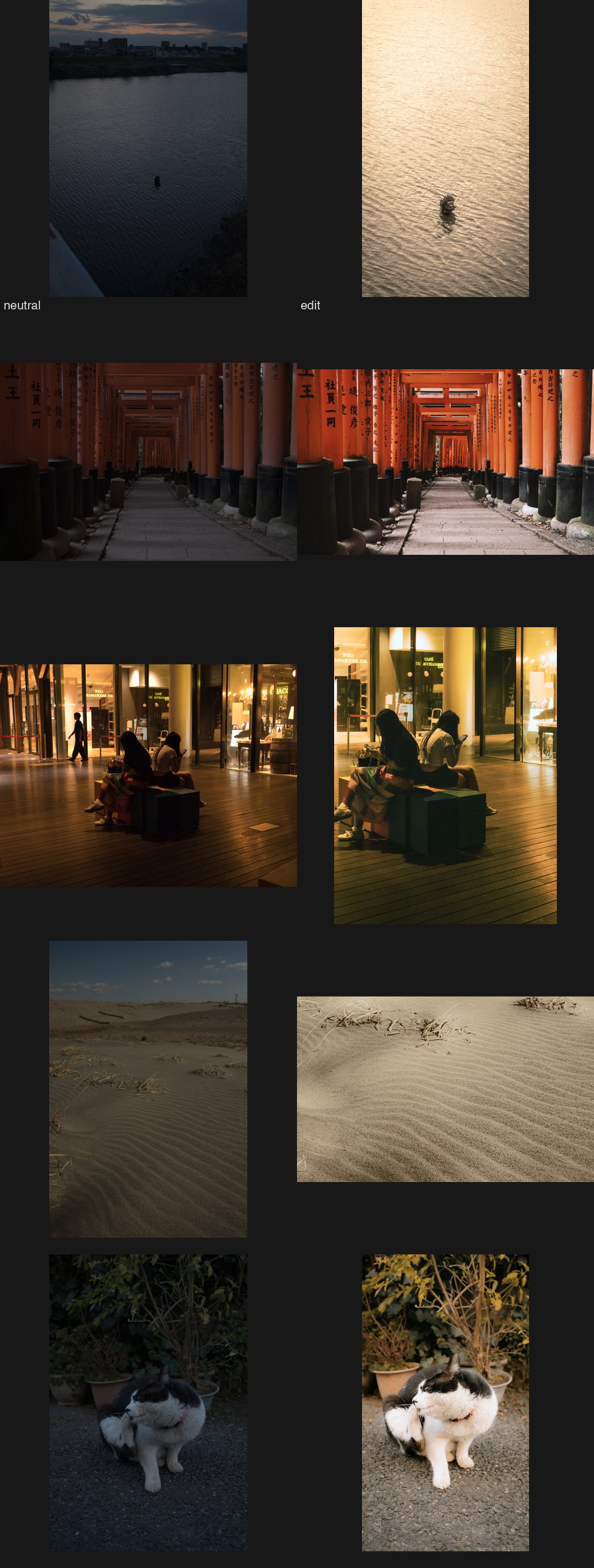
So my collaborator’s key is found at the moment of shooting and amplified afterwards. It is almost never built. That is the opposite of what I did in the previous study, where every key I made was built in editing out of a scene that had several colours, by pushing one hue into the shadows.
It also answers the second question. The computer model reads each scene and writes down its light source, “sun” or “lamp” or “overcast”. That does not predict a key: “sun” appears about as often on the keys as on the non-keys. What predicts a key is whether the whole frame is filled by one colour of light or one material, and that is not a word, it is a measurement you take from the pixels of the plain version. Golden hour produced a key in 38 of 47 photographs; overcast light in 2 of 17.
The number, tested blind
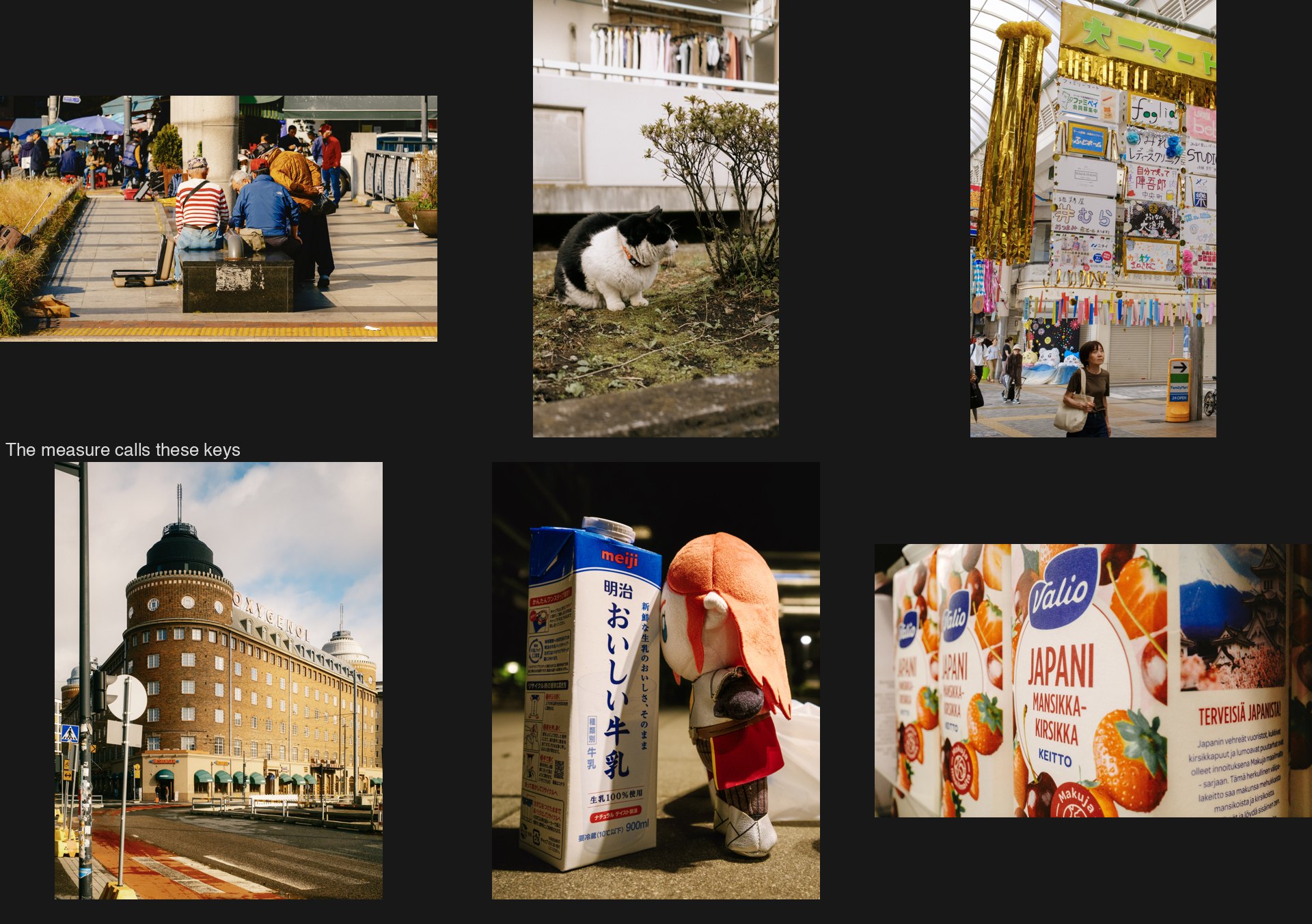
A third of the photographs the number calls keys are not keys. They are pictures with many colours under a warm tint, plus one large orange thing, and the number is fooled because orange dominates its arithmetic. The bar is set too low. Real keys sit well above it.
The second error is one I caused. In the previous study I wrote that a key is made where the shadows take the colour, and the modelling side built that into its definition: a key needs colour in the dark tones. My blind test says otherwise for this photographer. Among 16 photographs the number calls casts because their shadows are nearly grey, five are keys to my eye, and four of those five die when the saturation is halved: a camera on an amber counter, a sunset pier, orange peel in a white bag, a pink dusk sky. Their colour lives in the mid-tones and the highlights, with the shadows left dark and neutral. That is how film simulations put colour into a picture, and it is how my collaborator works. Pushing colour into the shadows is how I work. I had written my own habit down as a law. The definition is corrected.
The change over time
The share of my collaborator’s photographs that are keys has fallen, from about three in ten in the autumn of 2025 to one in twenty this year. I wanted to know whether their editing changed or their shooting did.
The plain versions say shooting. The share of scenes that arrive one-coloured fell the same way, from about a third to two percent. When such a scene appears, they turn it into a key at the same rate in both halves of 2025. What changed in 2026 is where the camera went: daylight, cities, many colours. The one real change in editing is earlier and goes the other way. In their first year, a third of the one-coloured scenes were rendered with the shadows drained to grey; from mid-2025 the shadows keep the colour.
What I take from it
The previous study ended with a rule I had found for myself: carry one colour into the dark. This study says my collaborator does not work by that rule and their keys are none the worse for it. Two ways of holding a picture in one colour: mine builds the colour in editing and puts it into the shadows; theirs finds it in the world and puts it into the light. A model of their taste needs their way, and until now only mine was written down.